
Call us anytime
Community Service Ideas for High School Students (With Examples)

Last updated: November 6, 2026
The best community service ideas for high school students meet a real need near you, use a skill you already have or want to build, and can grow over months, not one weekend. Tutoring younger students, coding a simple tool for a nonprofit, joining a NASA citizen science project and running a tech help desk at a senior center all qualify. You would be in good company: in 2023, 34.1% of Americans aged 16 and 17 volunteered through an organization, the highest rate of any age group, according to AmeriCorps and the U.S. Census Bureau. Below are 60 ideas grouped by type and by interest. After the list, you will see how to turn one idea into a sustained project and how to describe it on the Common App in 150 characters.
The service project that makes an admissions reader lean in is rarely on a list of 50 ideas. Including this one. Send me the exclusive ideas from our PhD mentors →
What counts as community service?
Community service is unpaid work that helps other people, a place or a cause. It usually falls into four types:
- Direct service: you work face to face with the people or animals you help. Tutoring and serving meals are examples.
- Indirect service: you help behind the scenes. Food drives, sorting donations and building things for others are examples.
- Advocacy: you raise awareness or push for a change in policy or behavior.
- Research and skills-based service: you use a skill such as coding, data analysis, design or science to solve a problem for a group.
All four count. Most strong service records mix them, for example tutoring (direct) that grows into a free worksheet library (indirect).
Community service ideas by type
Direct service
- Tutor younger students in math, reading or a second language, in person or online.
- Read aloud to children at a library story hour.
- Coach or assist a youth sports team.
- Serve meals at a community kitchen.
- Help English learners practice conversation.
- Be a buddy for a student with a disability in an inclusive sports or arts program.
- Help at a food pantry's distribution day.
- Visit residents at a senior living community.
Indirect service
- Run a food, coat or school-supply drive with a clear goal and a partner charity.
- Sort and shelve donations at a thrift store or food bank.
- Build little free libraries and keep them stocked.
- Assemble hygiene kits for a shelter.
- Make cards or care packages for hospital patients or service members.
- Knit or sew blankets for a neonatal unit or shelter.
- Repair donated bikes or computers for families who need them.
- Organize a book drive for a school with a small library.
Advocacy
- Run a campaign for safer crosswalks or bike lanes, with traffic counts you collect yourself.
- Start a mental health awareness week at your school with your counselors.
- Speak at a city council or school board meeting on an issue you have studied.
- Write op-eds or letters to your local paper about a community problem.
- Lead a campaign to cut cafeteria food waste, with before and after measurements.
- Organize a voter information table with a civic group, following your state's rules.
- Create a social media campaign for a local nonprofit's event.
Research and skills-based service
- Build or fix a website for a small nonprofit.
- Analyze a nonprofit's volunteer or donor data and give them a one-page summary.
- Translate flyers or forms for a clinic or school.
- Design posters, logos or videos for a local cause.
- Map community resources (food pantries, free clinics, parks) into one public guide.
- Survey neighbors on a local issue and present the results to the people who can act on them.
- Teach a free coding or spreadsheet class at a library.
Ideas 25 and 29 turn service into research with a real finding. Our mentors keep a private list of projects like them. Unlock the mentors' list →
Community service ideas by interest
STEM
- Join one of NASA's citizen science projects, such as Planet Hunters TESS, which searches for planets outside our solar system. NASA lists 49 projects "open to everyone (no citizenship required)."
- Find federal citizen science projects (EPA, Forest Service and others) through USA.gov's citizen science page and Volunteer.gov.
- Run a coding club for middle schoolers.
- Lead hands-on science demos at elementary schools or science nights.
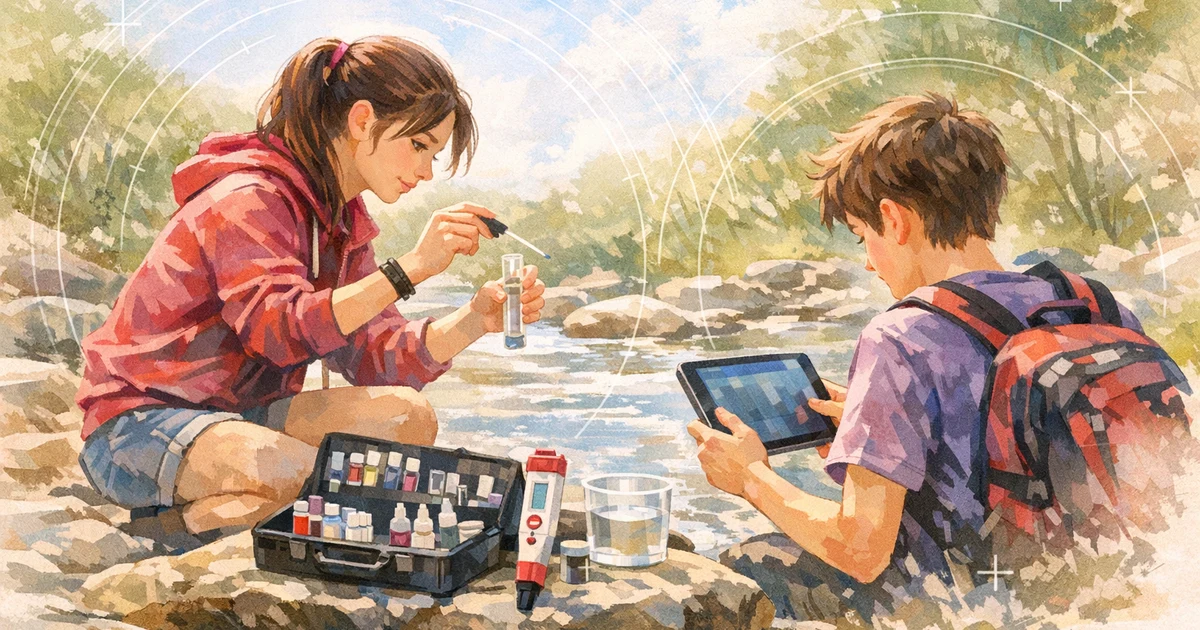
- Monitor water quality in a local creek and share the data with a town board.
- Write a simple app or spreadsheet tool for a nonprofit's real workflow.
Health
- Lead a hands-only CPR awareness day with a certified instructor.
- Help with registration at community blood drives.
- Make health information sheets easier to read, or translate them, for a local clinic.
- Start a peer support or stress-relief club with your school counselor.
- Collect and organize donated medical supplies for a charity that ships them.
Environment
- Plant native species with a parks department.
- Lead a monthly park, beach or river cleanup and log what you collect.
- Start a composting program at your school.
- Run an e-waste collection day with a certified recycler.
- Join a bird, butterfly or plant count for a conservation group.
Education
- Start a homework help hour at a community center.
- Run a summer reading challenge for younger kids.
- Make free study guides or videos for a hard course at your school.
- Teach an SAT or math skills workshop for students who cannot pay for prep.
Animals
- Walk dogs and socialize cats at a shelter.
- Photograph shelter animals for adoption listings.
- Organize a supply drive for a wildlife rehab center.
- Foster animals with your family through a rescue group.
Seniors
- Run a tech help desk for seniors: phones, video calls, scam safety.
- Record oral histories of older residents for a local library or historical society.
- Deliver meals with a meal-delivery program.
Arts
- Teach a free art or music class at a community center.
- Perform music at senior centers or hospitals.
- Paint a public mural with your town's permission.
For more ideas outside service, see extracurricular activities for high school students, passion project ideas and research topics for high school students.
Does community service help with college admissions?
It helps when it shows something about you. Colleges say so in their own words. MIT's admissions page says: "Tutoring a single kid in math changes the world." It adds: "We're looking to admit people who feel responsible to the communities they're a part of."
In January 2016, the Making Caring Common project at the Harvard Graduate School of Education published Turning the Tide, a report on college admissions. It urges "meaningful, sustained community service that is authentically chosen, consistent, and well-structured." It also asks admissions offices to value "quality—not quantity—of activities" and service that focuses on "doing with" people, not "doing for" them.
Read together, the message is clear:
- Depth beats hours. One project you stayed with for two years says more than ten one-day events.
- Choice matters. Service tied to your real interests reads as genuine.
- Results matter. Say what changed because you showed up.
Service is one part of the picture. See what colleges look for and how to get into MIT for the rest.
Two students log 100 hours each. One is remembered, because her work produced something a reader can see. Show me how to be that student →
How to turn one idea into a sustained project
Most students list service as a set of separate events. The stronger approach is to pick one idea and grow it over a year or more:
- Find a real need. Ask a teacher, librarian or nonprofit staff member what they lack. Do not guess.
- Partner with an organization. A library, school or nonprofit gives you space, people and a supervisor who can confirm your work.
- Start small and regular. One hour a week, every week, beats a big launch that fades.
- Measure something. Count students tutored, pounds of food collected, or water samples logged. Numbers make your work concrete.
- Add a skill layer. Turn tutoring into a worksheet library, or a cleanup into a data map. This is where service starts to look like research.
- Train others and hand off. A project that runs without you shows leadership better than any title.
Here is one example. A student starts by tutoring two middle schoolers at the library. After three months, she sees the same mistakes again and again. She builds a set of practice sheets for them. By spring she has trained other tutors, and the library runs it as a weekly program. That is one idea, carried from a single need to a lasting result.
How to list community service on the Common App
The Common App lets you list up to 10 activities. For each one, you get:
- Position or leadership: 50 characters. For 2026–27, this field becomes optional.
- Organization name: 100 characters.
- Description: 150 characters for "activity details, honors won, and accomplishments."
- Time: hours per week and weeks per year, in separate fields.
For 2026–27, the Common App renames the section "Activities and experiences." The character limits do not change. Because time has its own fields, do not spend your 150 characters on it.
A good description uses strong verbs, a number and a result. Here are five invented examples, each under 150 characters:
| Idea | Position (50 max) | Description (150 max) |
|---|---|---|
| Tutoring | Founder & Lead Tutor | Started free weekly math tutoring at public library. Trained 8 peer tutors; 30 middle schoolers served each term. Built shared worksheet bank. (142) |
| Citizen science | Volunteer Data Collector, Creek Monitoring | Collected monthly water samples at 3 creek sites for 2 years. Shared data with town conservation board; my report helped plan a stream cleanup. (143) |
| Coding for a nonprofit | Volunteer Developer | Built volunteer sign-up web app for a local food bank. Cut weekly scheduling time; trained staff to maintain it; used by 120+ volunteers. (137) |
| Seniors | Founder, Senior Tech Help Desk | Run Saturday tech help desk at senior center. Taught 40+ residents video calls and email safety. Recruited and trained 6 student volunteers. (140) |
| Science outreach | Science Outreach Lead | Designed hands-on physics demos for elementary classes. Led 12 school visits reaching 300 students; wrote a lesson kit teachers still use. (138) |
Order your activities by importance to you, not by date. For the full method, see the Common App activities list.
How many community service hours do you need?
No national number exists. Your high school, a scholarship or an honor society may set its own requirement, so check with them.
For context, AmeriCorps reports that half of formal volunteers aged 16 and up served 24 hours or more between September 2022 and 2023, and 18% served fully or partly online. Colleges see your hours per week and weeks per year on the Common App. Steady hours over many weeks tell a better story than one large burst.
Hours fill one line on your application. A project with a result fills a paragraph of your essay. Send me project ideas from PhD mentors at top-20 universities →
Frequently asked questions
What are the four types of community service?
Direct service, indirect service, advocacy, and research or skills-based service.
Is the President's Volunteer Service Award still available?
No. AmeriCorps put the award on a "temporary pause" effective May 27, 2025. Its official site says there is no date for it to resume.
Can community service be done online?
Yes. NASA's citizen science projects, translation, tutoring and nonprofit web work can all be done online. In 2023, 18% of formal volunteers in the U.S. served fully or partly online.
Does community service help you get into college?
It helps when it is sustained, chosen by you and shows results. MIT and the Turning the Tide report both stress depth and real impact over hours.
How do I describe volunteer work on the Common App?
Use the 150-character description for what you did and what changed, with a number. Put time in the hours and weeks fields.
Sources
- AmeriCorps, Volunteering and Civic Life in America
- AmeriCorps Open Data, 2017–2023 CEV Findings: National Rates by Demographics
- AmeriCorps, Renewed Engagement in American Civic Life: 2023 CEV Headline Report (PDF)
- The President's Volunteer Service Award (official site)
- Common App, Approaching the Activities Section (PDF)
- Common App, What's New with Common App: 2026–27 First-Year Updates (PDF)
- MIT Admissions, What We Look For
- Making Caring Common, Harvard Graduate School of Education, Turning the Tide
- NASA Science, Citizen Science Projects
- USAGov, How to Find a Citizen Science Opportunity
About learnSTEM
All bright students reach a point where school stops challenging them. learnSTEM provides that challenge: the space to explore a field of their choice, guided by a world-class PhD mentor from a top-20 university, completely one-on-one and on your own schedule. Students finish with a passion for a new subject, a research project they are proud of, and a clear sense of what they want to pursue next.
See if you qualify for the STEM Research Program → · Questions about eligibility? Contact us →
"It has only strengthened my love for learning about the world and given me a paper that I am proud to say I've made." — learnSTEM student
Admission deadlines
Early Admission – November 15, 2026
Regular Admission – December 13, 2026
Late Admission – January 31, 2027
The Program runs four times per year: Spring, Summer, Fall, and Winter.
