
Call us anytime
Passion Project Ideas for High School Students: 50 Ideas That Finish

Last updated: October 28, 2026
Passion project ideas for high school students work best when they start from a question you already care about and end with something other people can use or read: a study, an app, a dataset, a guide or a program that runs without you. Below are 50 ideas sorted by field, with the strongest ones in science, medicine and technology, followed by a step-by-step plan to pick one, finish it in a semester and describe it on your college applications.
What is a passion project?
A passion project is something you start on your own, outside of class, because you want to know or build something. Nobody assigns it and nobody grades it. That is what makes it useful to colleges: it shows what you do when you have a free choice.
A passion project is not the same as a list of hours. Three things separate a strong project from a weak one:
- A clear goal. "Learn about climate change" is a topic. "Measure how much hotter our school parking lot gets than the field next to it, and send the results to the district" is a project.
- A finished result. A paper, a working app, a published dataset, a website people use, an event that happened. Unfinished projects are hard to describe and easy to doubt.
- Your own decisions. The project shows what you chose, what failed and what you changed. That is what admissions readers and recommenders want to see.
Is a passion project worth it for college applications?
Yes, if it is real. MIT's admissions office says it directly: "we're not looking for applicants to have cured all infectious diseases in the world by the time they're 15. Tutoring a single kid in math changes the world." MIT also asks applicants to "choose quality over quantity," and its activities form only has room for four activities. The College Board gives the same advice to all applicants: depth of involvement is more impressive than a long list.
The Common App gives you room for up to 10 activities, with 150 characters to describe each one. A good passion project fills one of those spaces with a specific result, and it often gives you an essay topic as well.
Science and research passion project ideas
Research projects are the strongest kind of passion project for students who want to study science, because they follow the same steps that scientists follow: ask a question, collect evidence and write up what you found. Our list of research topics for high school students has more than 100 starting questions.
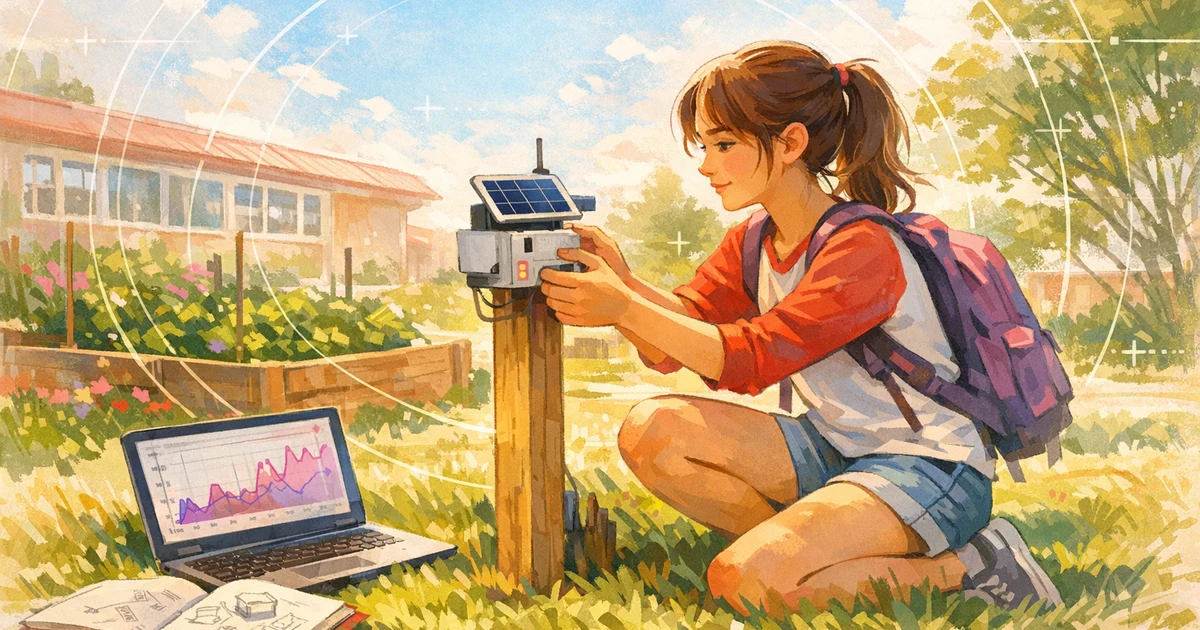
- Map the air quality on your street with a low-cost sensor and compare it with traffic counts at different times of day.
- Test your local water for nitrates or lead, compare the results with public records and share them with your town.
- Run a citizen science study of birds, insects or plants in one place over a season, and submit the data to a public database.
- Measure heat islands by comparing surface temperatures of parking lots, fields and tree-covered areas near your school.
- Replicate a published experiment with household materials and write up whether you got the same result.
- Study microplastics in sand or water samples from a local beach or river.
- Grow plants under different light colors or soils and measure growth over eight weeks.
- Analyze a public dataset (NOAA weather, CDC health, census data) to answer one specific question about your county.
- Build a simple seismometer or weather station and log data for a full season.
- Write a review paper that summarizes what scientists know about a narrow question and where they disagree.
Medical and health passion project ideas
Medical projects are strong when they involve data or real service, not just shadowing. For lab and hospital programs, see medical research internships for high school students.
- Survey sleep and screen time at your school (with permission) and analyze the results.
- Create a health guide in a second language for families in your community who do not speak English at home.
- Train classmates in hands-only CPR with a certified instructor and track how many people you reach.
- Analyze public hospital or CDC data on one condition in your state, such as asthma rates by county.
- Build a first-aid or medication-reminder app for older relatives, then test it with real users.
- Run a blood drive or bone marrow registry drive with a local organization.
- Write a literature review on a question such as how exercise affects teen anxiety.
- Start a health-literacy podcast in which you interview nurses, doctors and researchers.
- Study mental health resources at schools in your district and publish a comparison for students.
- Volunteer to make accessible materials for a clinic, such as large-print or translated forms.
Technology and engineering passion project ideas
- Build an app that solves a problem at your school, such as a lost-and-found, club calendar or bus tracker, and get real users.
- Train a machine learning model on a public dataset, such as images of plant diseases, and report how accurate it is.
- Design and 3D-print an assistive device for someone you know, then improve it based on their feedback.
- Contribute to an open-source project and get your code merged.
- Build a robot or drone that does one task well and document the build so others can repeat it.
- Make a website that collects local data, such as prices, wait times or park conditions, and keep it updated.
- Create a tool for teachers, such as a quiz generator or attendance tracker, and get feedback from them.
- Build a solar-powered device (a charger, a sensor or a light) and measure its output over time.
- Teach a free coding workshop at your library and publish the materials.
- Do a security or accessibility audit of a local nonprofit's website, with permission, and help them fix the problems.
Math, economics and data passion project ideas
- Model a real problem, such as the best bus routes in your town or the spread of a rumor in your school, and write it up.
- Start a math circle for middle school students and design the problem sets yourself.
- Analyze local sports statistics to test a common belief, such as home-field advantage.
- Build a personal finance course for classmates and measure what they learned with a before-and-after quiz.
- Study a local business question, such as foot traffic at different hours, with the owner's permission.
- Write a series of explainers on one hard math topic for students one year behind you.
- Compete in a modeling or data challenge and publish your approach afterwards.
Community, education and social impact ideas
- Tutor students for free in a subject you are strong in, and track their progress.
- Start a STEM club at a middle school or library that does not have one. For younger students, see how to get into research in middle school.
- Collect oral histories from older people in your community and archive them with a library.
- Run a book or laptop drive and set up a system that keeps it going after you graduate.
- Translate public information (school, city or health materials) for families who need it.
- Organize a science fair or hackathon for students in your area.
- Write a guide for new immigrant or first-generation students at your school.
Arts, writing and media ideas with a STEM angle
- Illustrate a children's book about a science topic and give copies to local schools.
- Make a short documentary about a scientist, an environmental issue or a local engineering project.
- Start a science newsletter or blog that explains one new study each week in plain language.
- Design data visualizations for a local nonprofit's annual report.
- Compose music from data, such as turning temperature records into sound, and explain the method.
- Write and submit a research paper. If your project produces results, journals for high school students review and publish student work.
How to choose a passion project
Most students pick a project that sounds impressive, lose interest by week three and never finish. Use these steps instead:
- Write down three questions you already think about. Not topics. Questions. "Why does my town flood every spring?" is a question.
- Check what you can actually do. Do you have the data, tools and permission you need? If not, can you get them within a month?
- Pick the one you would do even if no college ever saw it. You will need that motivation in week six.
- Define "done." Write one sentence that describes the finished result, such as "a 10-page paper with my own data" or "an app with 50 real users."
- Find one person who can give you feedback. A teacher, a professor or a professional in the field. Our guide on how to find a research mentor in high school explains how.
For research projects in particular, see how to choose a research topic in high school.
How to finish a passion project in one semester
A simple 12-week plan works for most projects:
- Weeks 1 to 2: Read what already exists. Write your question and your definition of "done."
- Weeks 3 to 4: Plan the method: what you will build, measure or collect, and how.
- Weeks 5 to 9: Do the work. Keep a log of what you did each week, including what failed.
- Weeks 10 to 11: Analyze your results and write them up, or test your product with real users.
- Week 12: Share it. Publish the paper, launch the site, present at school or send the results to someone who can use them.
The log matters more than most students expect. When you write your application, it gives you the specific details (numbers, failures and decisions) that make a description believable. For written projects, see how to write a research paper in high school.
How to describe a passion project on the Common App
The Common App activities section gives you 50 characters for your position, 100 characters for the organization name and 150 characters for the description. You also report hours per week and weeks per year. With so little space, every word must carry a fact.
Weak: "Founded a passion project about the environment. Learned a lot about science and leadership."
Strong: "Measured surface temperatures at 12 sites over 8 weeks; found parking lots 18°F hotter than fields. Presented to school board; 2 trees planted."
The strong version says what you did, how much and what happened. If your project needs more explanation, the Additional Information section of the Common App gives you more space. If you did a significant research project, MIT and some other colleges also let you submit a research supplement. MIT's version includes a questionnaire, an abstract or poster and a recommendation from your mentor. See how to get into MIT for details.
Common mistakes
- Starting too big. "Solve food insecurity in my city" will stall. "Map every food pantry in my zip code and their hours, and keep it updated" will finish.
- Choosing a project only because it sounds impressive. If it doesn't connect to anything else on your application, it looks random.
- Never sharing the result. A project that nobody saw is hard to verify. Publish it, present it or give it to someone who can use it.
For more on how admissions readers weigh activities, see what colleges look for.
Frequently asked questions
What is a good high school passion project? One that answers a question you care about, produces a finished result and shows your own decisions. A small project you finish beats a large project you abandon.
How long should a passion project take? Most good projects take one to two semesters. Twelve weeks is enough for a focused research question or a working first version of an app.
Do passion projects have to be STEM? No. But if you plan to study science, medicine or engineering, a STEM project connects directly to your intended major and gives your math or science teacher something specific to write about in a recommendation.
Can a passion project be research? Yes, and for STEM students it is often the strongest kind. See does research help college admissions.
Can middle school students do a passion project? Yes. Smaller versions of most of the ideas above work well from about 6th grade, especially citizen science, coding and data projects.
Sources
- MIT Admissions, What We Look For
- MIT Admissions, Essays, Activities and Academics
- MIT Admissions, Portfolios and Additional Material
- College Board, How Colleges Make Admission Decisions
- Common App, Approaching the Activities Section (PDF)
About the STEM Research Program
We look for students who are curious, self-motivated and ready for independent work. Prior research experience is not required. Each admitted student works one-on-one with a PhD mentor from a top-20 university, online, for 12 weeks, and sets a research question with their mentor by week four. Students finish with a completed research paper, a written evaluation from their mentor and a one-on-one college counseling session.
Start your application to the STEM Research Program → · Questions about eligibility? Contact us →
Admission deadlines
Early Admission – November 15, 2026
Regular Admission – December 13, 2026
Late Admission – January 31, 2027
The Program runs four times per year: Spring, Summer, Fall, and Winter.
